Best UV Lasers in 2026
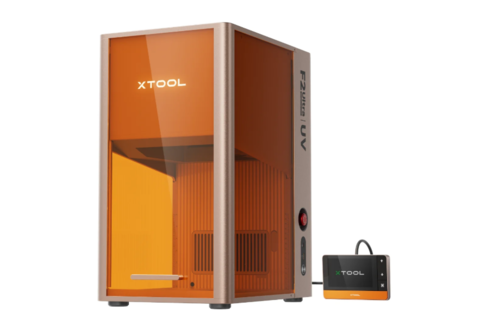
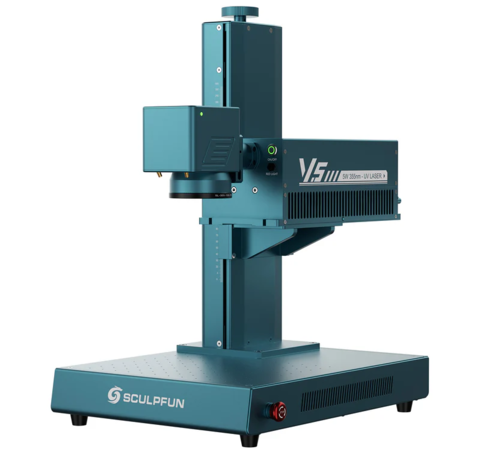
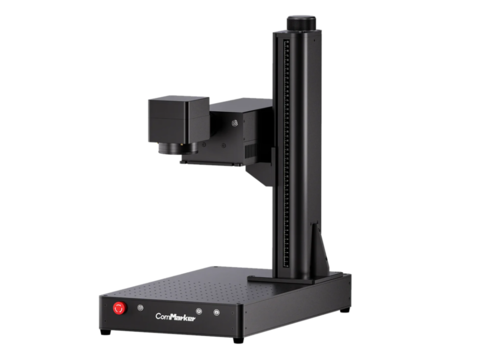
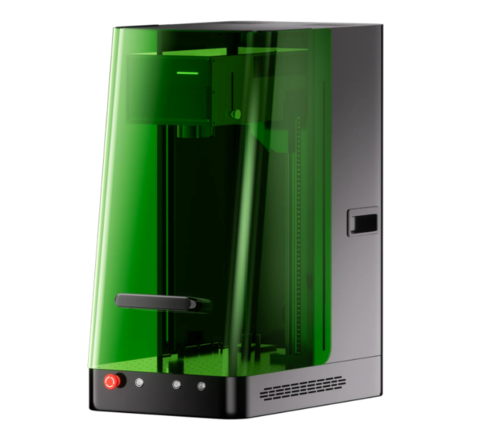
UV lasers operate at 355nm — a "cold" process that breaks molecular bonds rather than burning, leaving no charring or heat damage. They can mark transparent glass and crystal (including 3D internal engraving), delicate plastics, PCBs, ceramics, and food-safe surfaces untouched by other laser types. Power ranges from 3W to 10W; galvo heads give extremely high marking speeds.
UV Laser Buying Guide
What is a UV laser?
UV lasers operate at 355nm — roughly one-third the wavelength of blue diode lasers. At this short wavelength, photons carry enough energy to break molecular bonds directly (photochemical ablation) rather than heating material to its melting point. The result is a "cold" process: no charring, no heat-affected zone, and no discolouration on heat-sensitive materials.
What can UV lasers do that other lasers cannot?
Three capabilities set UV apart: (1) Engraving transparent glass and crystal — diode and CO2 beams pass straight through without marking; UV is absorbed. (2) True 3D sub-surface engraving inside glass or crystal objects, previously only possible with industrial equipment costing $50,000+. (3) Marking white and light-coloured plastics, PCBs, ceramics, and food-safe packaging cleanly — surfaces that blue diode lasers scorch and CO2 lasers melt.
Power and speed — what to expect
Desktop UV lasers are typically 3W to 6W of optical power. That sounds low compared to 40W diode machines, but the photochemical process is highly efficient on UV-absorbing materials. All current desktop UV units use galvo scanning heads capable of 10,000–15,000 mm/s — far faster than any gantry machine. Work areas are smaller, typically 70×70mm to 200×200mm.
UV laser limitations
UV lasers are engraving and marking tools — they do not cut. The beam penetrates only a fraction of a millimetre into most surfaces. They are also significantly more expensive than diode lasers at equivalent output power, and the 355nm optics require more careful handling. Most UV machines use EzCad2 or LightBurn (v1.7+) for control.
Who should buy a UV laser?
UV lasers are specialist tools best suited for: personalising glassware and crystal awards; marking PCBs and electronic components; engraving food-safe surfaces (cutting boards, reusable bottles); marking delicate plastics without melting; and 3D crystal/glass trophy engraving. If you mainly work with wood, leather, or acrylic, a diode laser will serve you better at lower cost.