Snapmaker Ray 20W vs xTool S1 20W
| Laser | ||
| Type | Diode Laser | Diode Laser |
| Wavelength | 455 nm | 455 nm |
| Optical Power | 20 W | 20 W |
| Performance | ||
| Work Area | 400 × 600 mm | 498 × 319 mm |
| Max Speed | 30,000 mm/min | 36,000 mm/min |
| Focus | Manual | Autofocus |
| Features | ||
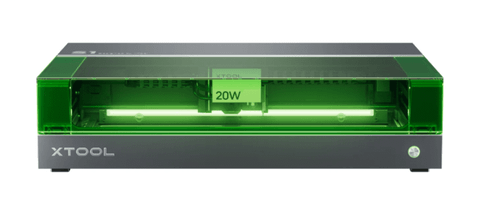
| Enclosure | No | Yes |
| Air Assist | Yes | Yes |
| Rotary Compatible | Yes | Yes |
| WiFi | Yes | Yes |
| Camera | No | Yes |
| Physical | ||
| Approx. Price | $1,299 | $1,099 |
| Release Year | 2023 | 2023 |
| Weight | 14.6 kg | 18 kg |

Pros & Cons
Snapmaker Ray 20W
What we like
- Smart Air Assist pump included in box
- Large 400×600mm work area
- Wi-Fi + USB connectivity
- LightBurn compatible out of the box
- Strong Snapmaker community and ecosystem
Watch out for
- No autofocus (manual focus lever)
- No built-in enclosure (sold separately)
- No camera for material detection
- Lower power than 40W model
xTool S1 20W
What we like
- Full enclosure for safe operation
- Built-in camera for precise positioning
- Autofocus saves setup time
- Extremely fast at 36,000 mm/min
- Excellent build quality and finish
Watch out for
- Premium price compared to open-frame alternatives
- Heavy at 18 kg — not easily portable
- Enclosure limits maximum material height
Compatible Materials
Snapmaker Ray 20W
WoodAcrylicLeatherFabricPaperAnodized Aluminum
xTool S1 20W
WoodAcrylicLeatherCardboardFabricPaperRubberStoneMetal EngravingAnodized Aluminum
The xTool S1 20W costs $1,099 (15% less) than the Snapmaker Ray 20W, which is priced at $1,299.
Both machines share the same 20W optical power rating.
The Snapmaker Ray 20W offers a 34% larger work area (400 × 600 mm vs 498 × 319 mm).
The xTool S1 20W has a 17% higher maximum speed (36,000 mm/min vs 30,000 mm/min).
Feature-wise, xTool S1 20W includes an enclosure, while Snapmaker Ray 20W does not; xTool S1 20W includes a camera, while Snapmaker Ray 20W does not.