AlgoLaser Alpha MK2 40W Extended (15.7"×33.5") vs xTool D1 Pro 20W
| Laser | ||
| Type | Diode Laser | Diode Laser |
| Longueur d'onde | 450 nm | 455 nm |
| Puissance optique | 40 W | 20 W |
| Performance | ||
| Zone de travail | 400 × 850 mm | 430 × 390 mm |
| Vitesse max | 20,000 mm/min | 24,000 mm/min |
| Mise au point | Manuelle | Manuelle |
| Fonctionnalités | ||
| Enceinte | Non | Non |
| Assistance air | Oui | Oui |
| Compatible rotatif | Oui | Oui |
| WiFi | Oui | Oui |
| Caméra | Non | Non |
| Physique | ||
| Prix approx. | $1,118 | $699 |
| Année de sortie | 2024 | 2022 |
| Poids | 8.4 kg | 5.8 kg |
Avantages et inconvénients
AlgoLaser Alpha MK2 40W Extended (15.7"×33.5")
Ce qu'on aime
- Extended bed nearly doubles usable length over the standard 40W Alpha MK2
- 40W handles thicker cuts than the 20W extended model
- Same touchscreen smart features
- Automatic air assist included
Points d'attention
- Largest footprint in the open-frame Alpha MK2 lineup
- Most expensive open-frame Alpha MK2 configuration
- No enclosure on this configuration
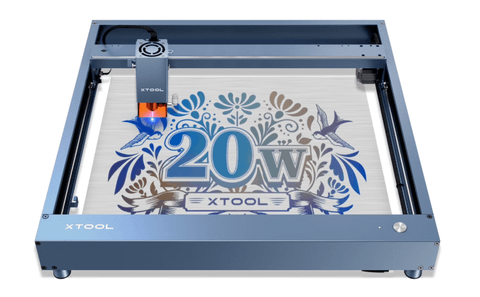
xTool D1 Pro 20W
Ce qu'on aime
- Cuts up to 10mm pine in a single pass
- Air assist included in the box
- WiFi and USB control
- Excellent engraving speed at 24,000 mm/min
- Wide material compatibility
Points d'attention
- No enclosure — not safe for unattended operation
- Higher price point for a diode laser
- Requires ventilation setup for cutting fumes
Matériaux compatibles
AlgoLaser Alpha MK2 40W Extended (15.7"×33.5")
BoisAcryliqueCuirCartonTissuPapierCaoutchouc
xTool D1 Pro 20W
BoisAcryliqueCuirCartonTissuPapierCaoutchoucPierreGravure métal
Le xTool D1 Pro 20W coûte 699 $ (37 % de moins) que le AlgoLaser Alpha MK2 40W Extended (15.7"×33.5"), proposé à 1,118 $.
Le AlgoLaser Alpha MK2 40W Extended (15.7"×33.5") offre 50 % de puissance optique en plus (40W contre 20W).
Le AlgoLaser Alpha MK2 40W Extended (15.7"×33.5") propose une zone de travail 51 % plus grande (400 × 850 mm contre 430 × 390 mm).
Le xTool D1 Pro 20W atteint une vitesse maximale 17 % supérieure (24,000 mm/min contre 20,000 mm/min).