Glowforge Spark vs. Snapmaker Ray 20W
| Laser | ||
| Typ | Diode Laser | Diode Laser |
| Wellenlänge | 455 nm | 455 nm |
| Optische Leistung | 6 W | 20 W |
| Leistung | ||
| Arbeitsbereich | 203 × 305 mm | 400 × 600 mm |
| Höchstgeschwindigkeit | 8,000 mm/min | 30,000 mm/min |
| Fokus | Autofokus | Manuell |
| Funktionen | ||
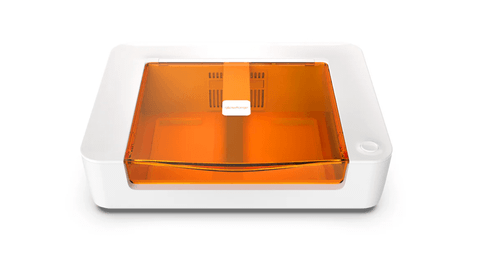
| Gehäuse | Ja | Nein |
| Luftunterstützung | Nein | Ja |
| Rotationsaufsatz-kompatibel | Nein | Ja |
| WLAN | Ja | Ja |
| Kamera | Ja | Nein |
| Physisch | ||
| Ca.-Preis | $899 | $1,299 |
| Erscheinungsjahr | 2024 | 2023 |
| Gewicht | 4.9 kg | 14.6 kg |

Vor- und Nachteile
Glowforge Spark
Was uns gefällt
- Easiest laser to get started with — ~30-minute setup
- Free Glowforge Print software works on any device (Mac, PC, tablet, phone)
- Built-in camera with live preview for material placement
- Class 1 enclosed — safe for home and classroom use
- Wide material library with auto-detected settings
Achtung
- Cloud-dependent — requires internet for every job
- Small 203×305mm cutting area for the price
- Only 6W — limited cut depth and no thick stock
- Subscription costs for premium design catalogue
- Not compatible with LightBurn
Snapmaker Ray 20W
Was uns gefällt
- Smart Air Assist pump included in box
- Large 400×600mm work area
- Wi-Fi + USB connectivity
- LightBurn compatible out of the box
- Strong Snapmaker community and ecosystem
Achtung
- No autofocus (manual focus lever)
- No built-in enclosure (sold separately)
- No camera for material detection
- Lower power than 40W model
Kompatible Materialien
Glowforge Spark
HolzLederAcrylPappeStoffPapierGummi
Snapmaker Ray 20W
HolzAcrylLederStoffPapierEloxiertes Aluminium
Glowforge Spark kostet $899 (31% weniger) als Snapmaker Ray 20W, das $1,299 kostet.
Snapmaker Ray 20W hat 70% mehr optische Leistung (20W vs. 6W).
Snapmaker Ray 20W bietet einen 74% größeren Arbeitsbereich (400 × 600 mm vs. 203 × 305 mm).
Snapmaker Ray 20W hat eine 73% höhere Höchstgeschwindigkeit (30,000 mm/min vs. 8,000 mm/min).
Bei den Funktionen gilt: Glowforge Spark verfügt über ein geschlossenes Gehäuse, Snapmaker Ray 20W nicht; Snapmaker Ray 20W verfügt über Luftunterstützung, Glowforge Spark nicht; Glowforge Spark verfügt über eine Kamera, Snapmaker Ray 20W nicht; Snapmaker Ray 20W verfügt über Kompatibilität mit einem Rotationsaufsatz, Glowforge Spark nicht.